Fence Company in Miami, FL: Installation, Repair & Gates
Homeowners searching for a fence company near me in Miami turn to Miami Fence Installers because we are local, we know this soil and this climate, and the same crews handle your work from start to finish. We install new wood and vinyl privacy fences, chain link and aluminum ornamental iron fencing, repair failing fences and posts, build and repair gates including automatic driveway gates, install pool barriers, and handle storm damage rebuilds across Miami, Hialeah, Miami Beach, Coral Gables, Doral and the surrounding areas. The coastal-plain housing stock here is nearly all single-family properties on sandy soil with a very high share carrying pools, which means we understand the specific demands this region places on a fence: salt air that attacks fasteners and galvanizing, humidity that rots untreated wood at the ground line, and sandy soil that holds a post poorly unless it is set deep and properly in concrete.
We are fully insured. When you call, you reach people who can walk your fence line, diagnose what is actually wrong, and tell you whether the repair will hold or whether replacement is the better spend. We quote both when both are real options, and we price by the linear foot. Call (786) 655-4173 for a free estimate, or read more about fence repair to see whether your fence can be saved.
Why Fences Lean in Miami: Clay Soil and Rotted Posts
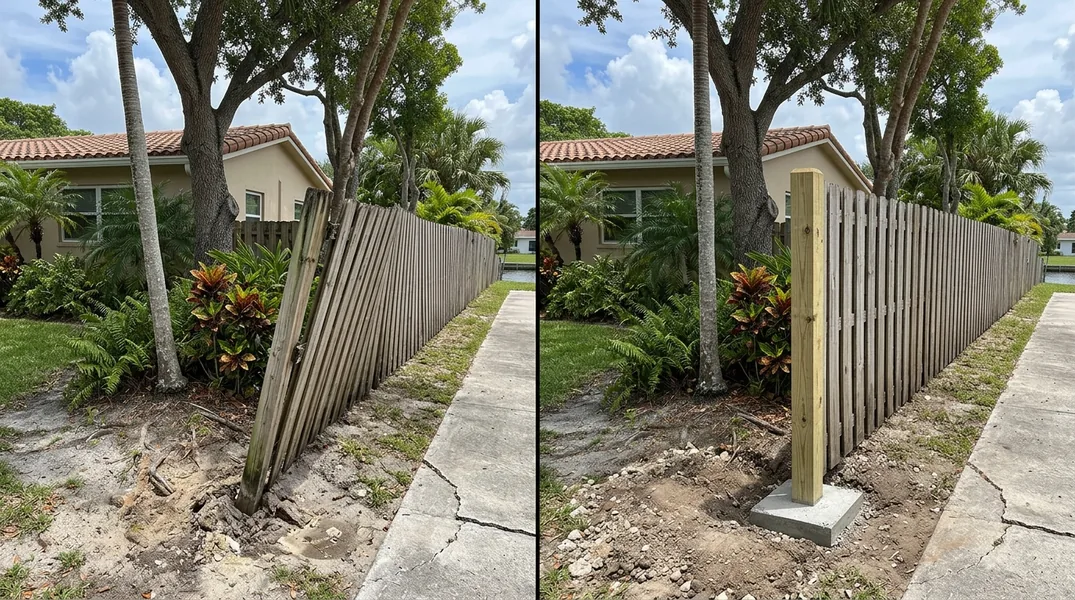
The most common reason a fence leans here is not wind or age alone, but the way sandy soil and humidity work on a post set at the ground line. Our soil drains fast, which is good for foundations, but it holds a post poorly without concrete. When a post is set shallow or in tamped earth alone, seasonal shifts in moisture cause the soil to move around the base, working the post back and forth year after year. At the same time, humidity keeps the wood damp right at ground level, where rot begins. Over time, the post fails inside what looks like a sound footing, or the concrete itself heaves slightly, and the fence racks out of plumb. This is not a panel problem; it is a post problem, and it requires a diagnosis that walks the whole fence line, not just the section that moved.
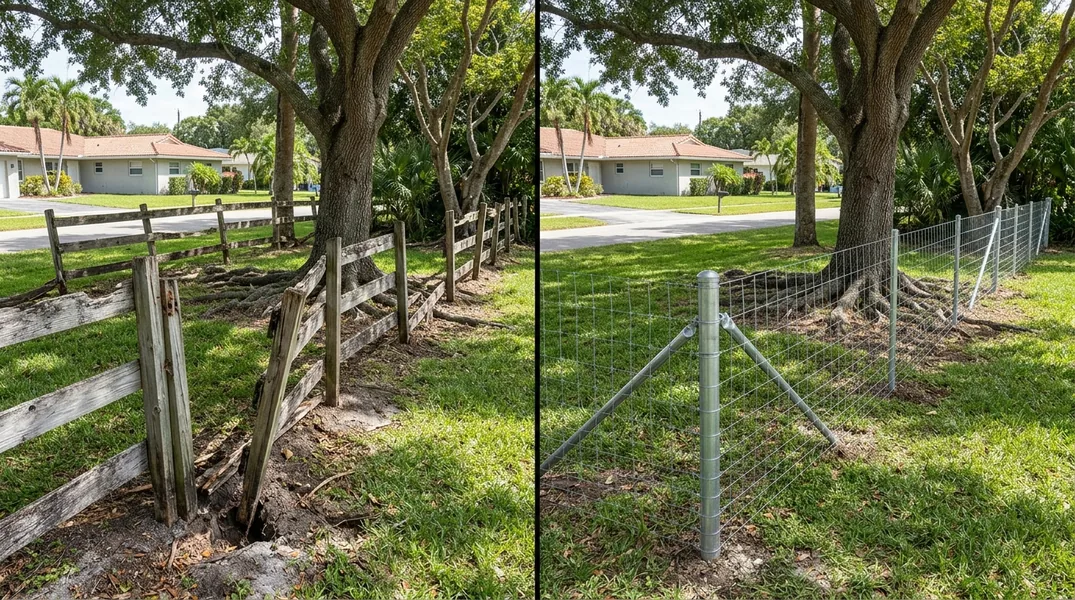
When we assess a leaning fence, we test every post, not just the obvious one. We check whether the concrete footing has heaved or shifted, or whether the wood has decayed at the ground line and lost its strength. A fence with sound pickets, rails and stringers and a handful of failed posts is worth repairing. Resetting or replacing those posts, setting them deep in concrete with proper diameter footings, saves the rest of the fence and costs far less than replacement. But a fence where posts have rotted along the whole run, or where the concrete footings have heaved throughout, is at end of life. Repairing it section by section costs more over five years than replacing it once. We replace wood that has decayed at the ground line; moisture is the cause. We do not perform termite or pest inspections, apply chemical treatments, or carry out pest control, which is a separate regulated trade in Florida. When we quote your fence, we look at both repair and replacement and tell you which one makes sense. Call (786) 655-4173 to have your fence line walked and assessed, or visit our fence post repair page to learn more about how we reset and replace posts in this soil.
The key to a fence that lasts in Miami is starting with posts set right. Posts should be spaced at intervals the local building department approves, typically 4 to 6 feet, and set in concrete deep enough that frost heave is not a concern (though frost is rare here, the principle of depth still holds). Pressure-treated pine or cedar posts, galvanized hardware, and proper concrete footing diameter mean the difference between a fence that lasts ten years and one that lasts twenty. We use the right materials from the start, and we quote both repair and replacement on request.
Storm Damage Fence Repair in Miami
Hurricane and tropical storm damage to a fence can be severe and widespread. A single named storm can push entire runs of fence over on the same line, snap posts at grade, or scatter panels. When that happens, the fence needs to be rebuilt, and a fence rebuilt after a storm is an opportunity to do it better than it was before. New posts should be set deeper and in larger concrete footings than the ones that failed, and hardware should be galvanized or powder-coated to resist salt air. We provide a free damage assessment, photograph each section of damage, and give you a written estimate that documents what needs to be done and the cost to do it. You may then choose to submit that estimate to your insurance carrier as part of your claim.
We help you document the damage, but coverage decisions rest with your insurer. We do not adjudicate claims, promise that work will be covered, or offer to absorb any part of a deductible. What we do is give you an honest assessment and a clear estimate so you have the information you need to talk to your carrier. If you have storm damage to your fence, call (786) 655-4173 or visit our storm damage fence repair page to schedule an assessment.
Cedar, Pine, Vinyl or Chain Link: Choosing for This Climate
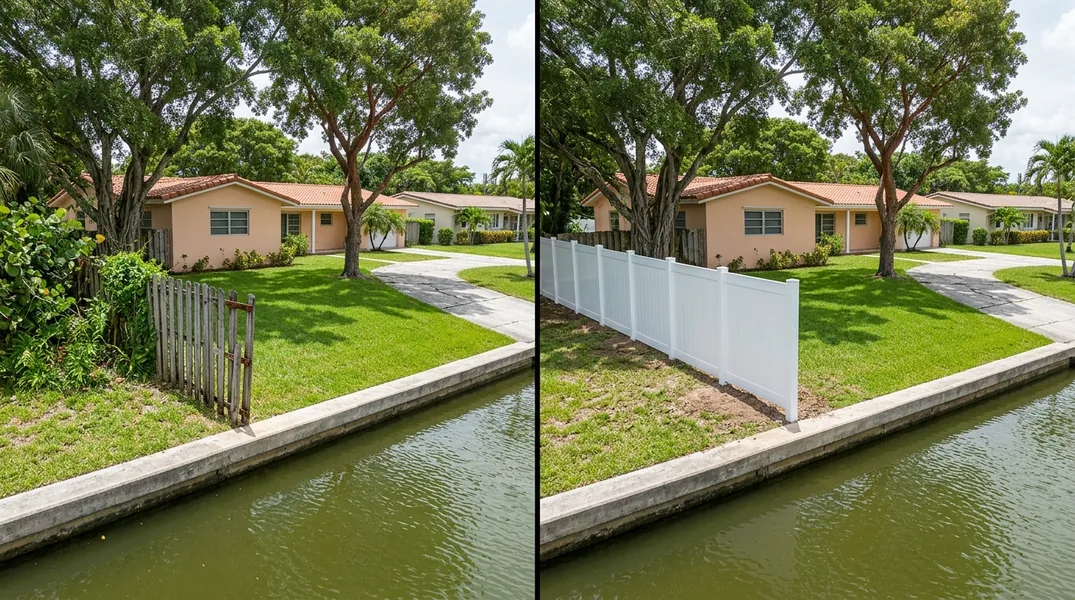
Choosing a fence material for Miami means balancing durability, maintenance, and cost over the life of the fence. Cedar is beautiful and naturally resistant to rot, but it wants cleaning and re-staining every two to three years under this sun and humidity; a cedar fence that gets that care lasts closer to twenty years, while one that does not lasts closer to ten. Pressure-treated pine is a solid budget option that holds stain reasonably well and costs less upfront. Vinyl and PVC require no staining and resist rot and salt air, but they expand and contract with temperature and do not work well for every application; vinyl is excellent for privacy fence in full sun, less ideal for high-wind exposure where its flexibility can become a liability. Chain link is the toughest per dollar, and the gauge and mesh size determine its strength; 11-gauge galvanized chain link is standard, and a 6-foot height with tension bands and a stretcher bar holds well in this climate. Aluminum and ornamental iron are chosen here not only for their look but for their corrosion resistance in salt air; they are ideal for pools, front yards and properties where racking to follow grade matters. Vinyl, aluminum and powder-coated steel do not need staining, which saves labor over the years.
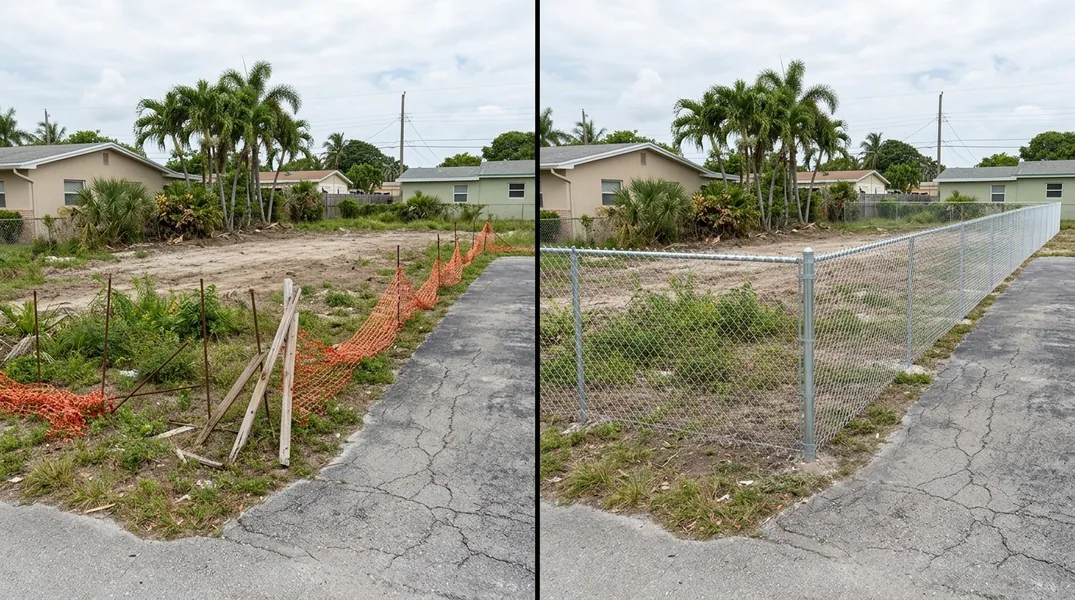
Every fence is quoted by the linear foot on site, because slope, access, tear-out cost, gate count and post spacing all change the number. We walk your property, measure the fence line, and give you a price that reflects what the job actually takes. Visit our pricing page for a sense of what materials cost, and see our service pages for wood and privacy fence, vinyl fence, chain link, and aluminum and ornamental iron to learn more about each.
Permits, HOA Rules, Property Lines & Pool Barriers
In most jurisdictions across Greater Miami, a fence permit is required before installation begins, and requirements for height, setback from the property line, and material vary by city and county. Many cities in the area require a minimum setback from the front property line and limit height in front yards to 4 feet, while side and rear fences may go higher. If your property is part of a master-planned community with an HOA, architectural approval is usually needed before work starts, and deed restrictions commonly govern height, material and color. It is worth checking your HOA rules and any deed restrictions before you plan your project. We install on the fence line you identify, working from your existing survey or plat, but determining a boundary is the work of a licensed land surveyor, and we recommend confirming the line in writing with your neighbor and any HOA before we start. A property survey removes any doubt about where the line lies.
Pool fencing is installed to meet the pool barrier codes that apply at your address, with self-closing self-latching hardware on any gate. Final determination of compliance rests with the local building official having jurisdiction at your property. We do not certify pool barriers as compliant; that determination is made during a final inspection by the authority. No barrier replaces supervision of children around water. When we set fence posts, we request Florida 811 utility locates before digging, which marks the location of underground utilities operated by participating providers. The 811 locate does not mark private lines such as irrigation or landscape lighting, so please tell us about any private underground lines on your property. Requirements vary by jurisdiction and HOA, always verify with the Miami building department and your HOA before starting your project. Call (786) 655-4173 or request a free estimate and we can discuss what applies to your property.
Ready to get started? Miami Fence Installers serves in Miami and surrounding areas. Book your free on-site estimate today.
Get Your Free Estimate