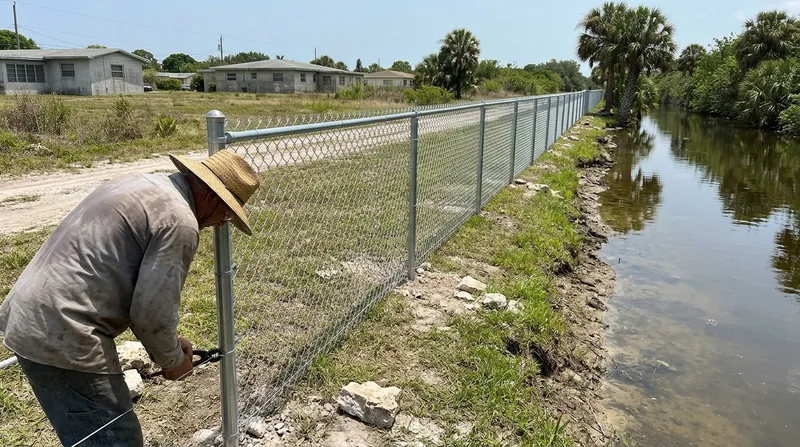




Farm fence installation in Miami requires a different approach than residential privacy fencing. The flat terrain, sandy soil, proximity to salt air, and hurricane-prone climate shape how we build agricultural and ranch boundaries in Greater Miami. Whether you are protecting pasture, marking property lines along canals, or containing livestock on acreage in Homestead, Kendall, or Miami Gardens, the fence must withstand wind, salt corrosion, and the rapid drainage that sandy ground demands. We have installed and repaired farm and ranch fencing across Miami-Dade County since 2011, working with materials and post-setting methods that hold up to local conditions.
Why Farm and Ranch Fencing Matters in Miami's Unique Landscape
Miami's agricultural properties sit on coastal plain terrain with poor soil retention and high water tables. Posts set in loose sand without proper footing depth and diameter will lean and fail within a few seasons, especially when hurricane winds arrive. Salt air corrodes untreated fasteners and galvanizing, turning steel hardware into rust within months. The combination of these factors means that farm fencing here is not a generic installation, it is an engineered solution tailored to local ground and climate.
- Posts must be set deep in concrete footings rather than tamped earth alone to resist sandy soil migration and wind leverage.
- Materials chosen for corrosion resistance, including vinyl-coated wire, powder-coated steel, and aluminum components, outlast bare galvanized fasteners by years.
- Wire spacing and gauge must account for animal size and behavior, from cattle to horses to smaller livestock.
- Canal-bank installations require careful setback observation and drainage planning to prevent washout during heavy rain.
- Hurricane season wind loading demands anti-sag bracing and proper post spacing to keep the line straight through storm surge.
These details separate a fence that holds for a decade from one that needs repair after the first major weather event.
Key info: Miami-Dade County permits are required for most agricultural fencing over 4 feet in height. Setback and material rules vary by zoning district. We verify all local requirements before you break ground. Contact the Miami-Dade Department of Regulatory and Economic Resources to confirm rules for your specific property location.
How We Install Farm and Ranch Fencing in Miami: Process and Materials
Our installation process begins with a site walk to assess soil conditions, drainage, existing utility lines, and any deed restrictions or HOA rules that govern height and material. We call for an 811 utility locate before digging any post holes, as Florida law requires it. We then mark the fence line, set posts in concrete at proper depth and spacing, and run wire or boards to specification. For most farm work in Miami, we use vinyl-coated or powder-coated materials to resist salt air, and we space posts closer than residential fencing to handle wind and wire tension.
- Verify property lines and local permit requirements with the Miami-Dade Building Department.
- Call 811 for utility locates at least 48 hours before digging.
- Mark fence line and confirm layout with you on site.
- Dig post holes to frost-free depth (not applicable in Miami, but footing diameter and concrete volume are critical).
- Set posts in concrete and allow 24 to 48 hours for cure before stringing wire or attaching boards.
- Install wire, boards, or rail system according to your animal type and property needs.
- Inspect tension, sag, and fastener security before final walkthrough.
A typical farm fence installation takes 2 to 5 days depending on acreage and material choice. We also handle fence repair when existing lines need patching or reinforcement.
Example: A homeowner in Homestead with 3 acres and sandy soil wanted to contain horses. We set vinyl-coated posts in 3-foot concrete footings spaced 6 feet apart, ran 5-strand no-climb horse fence with anti-sag bracing, and completed the job in 4 days. The vinyl coating protects fasteners from salt air, and the concrete depth anchors posts against Miami's hurricane winds and loose ground.
Farm and Ranch Fencing Methods and Materials
| Approach | Description | Best for |
|---|---|---|
| No-climb horse fence | Vinyl or coated wire mesh in a grid pattern, prevents hooves from catching and climbing. | Equestrian properties and pastures with horses or similar livestock. |
| Pipe fence installation | Steel or aluminum pipe posts and rails, powder-coated for corrosion resistance, strong and durable. | High-wind areas and properties where durability and low maintenance are priorities. |
| Split rail fence installation | Wooden rails mortised into posts, rustic appearance, pressure-treated to resist rot at the ground line. | Properties where aesthetics matter and wood is acceptable, though vinyl-coated rail lasts longer in Miami salt air. |
| Barbed wire and strand fencing | Barbed or smooth wire strung between posts with tension bands and stretcher bars, minimal material cost. | Cattle and large livestock, property boundaries where visual obstruction is not required. |
| Ranch fence installation | Multi-strand or board-and-wire hybrid systems, flexible to animal type and site conditions. | Mixed-use properties, canal banks, and areas where custom layouts match existing terrain and drainage. |
Each method carries different maintenance needs and lifespans. Vinyl and powder-coated materials resist Miami's salt air and humidity, while bare wood and untreated fasteners require regular inspection and replacement. We recommend vinyl-coated or aluminum components for properties near the coast or in high-wind zones.
Farm and Ranch Fencing Cost in Miami: What to Expect
Farm and ranch fencing in Miami starts at around $14 per linear foot for basic strand wire or split rail with pressure-treated wood posts. Vinyl-coated no-climb horse fence runs $18 to $28 per foot, and pipe fence with powder-coated aluminum or steel runs $22 to $35 per foot. The final cost depends on post spacing (tighter spacing costs more but increases durability in sandy soil), material choice (vinyl and powder-coat add 30 to 50 percent over bare wood or galvanized), and site access (remote properties or canal-bank installations may require specialized equipment and labor). A typical 2-acre property with a perimeter of roughly 1,000 linear feet will run $14,000 to $35,000 depending on material and footing depth. We recommend getting 2 to 3 estimates to compare methods and pricing. Visit our pricing overview for detailed line-item costs and to request a free estimate.
Factors that move the cost up include concrete footing depth and diameter (deeper and wider in sandy soil), post spacing (hurricane-resistant spacing is tighter than code minimum), corrosion-resistant coatings (vinyl and powder-coat premium), wire gauge and mesh size (heavier gauge holds longer under tension), and site access and terrain (canal-bank or remote properties may require equipment rental or multiple trips). We provide a detailed line-item estimate on site after measuring and assessing soil conditions.
Farm and Ranch Fencing Near Me: What Miami Homeowners Should Know Before Hiring
Choosing a fence contractor for agricultural property requires more than a low bid. You need someone who understands Miami's soil and climate, knows local permit rules, and can explain why certain materials and methods cost what they do. Before you hire, verify that the contractor carries general liability and workers' compensation insurance and can provide a certificate of insurance on request. Fence licensing in Florida is set county by county and varies across Greater Miami. Ask your local building department what requirements apply to your jurisdiction. Get at least two estimates, and check references from recent jobs in your area. Ask to see examples of farm fencing installed in similar Miami soil and climate conditions. Understand what your HOA or deed restrictions permit in terms of height, material, and color. If your property includes a canal bank or wetland, confirm that the contractor knows the setback and environmental rules that apply. Call us for a free estimate at (786) 655-4173, and we will walk you through the process and answer your questions on site.
Farm & Ranch Fencing in Miami: Pricing Guide
| Service | Price | Details |
|---|---|---|
| Basic strand wire or split rail fencing | Starting at $14/ft | Pressure-treated posts in concrete, wire or rails strung between, suitable for cattle and property lines in sandy soil |
| No-climb horse fence or vinyl-coated wire | Starting at $18/ft | Vinyl-coated posts and mesh, anti-sag bracing, tighter post spacing for wind resistance and animal containment on acreage |
| Pipe fence with powder-coated steel or aluminum | Starting at $22/ft | Corrosion-resistant coating, hurricane-grade post spacing, ideal for high-wind coastal properties and long-term durability |
| Custom ranch fence installation or canal-bank work | On estimate | Site-specific layout, drainage planning, specialized access, and material combinations require on-site assessment before pricing |
| Travel and site visit | Included | No separate mileage fee or call-out charge for Miami and surrounding service areas within Greater Miami-Dade County |
| Free estimate | No obligation | Response within 24 hours at (786) 655-4173, includes site walk, soil assessment, and written quote with line-item detail |
Indicative pricing, the exact cost depends on square footage, finish, and site access. Free personalized estimate within 24h at (786) 655-4173.


