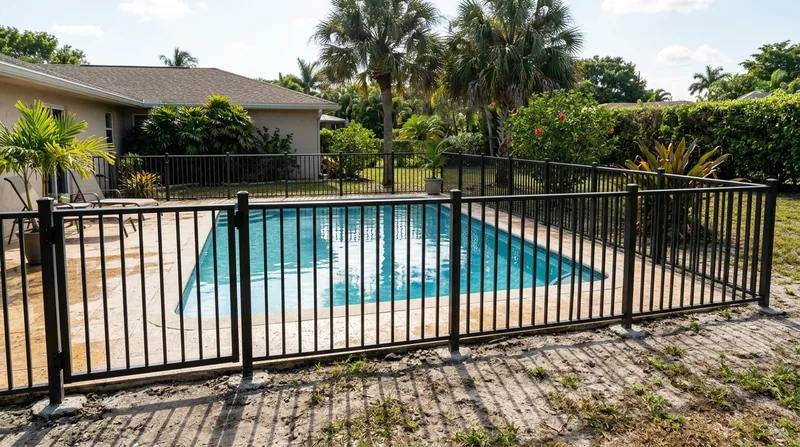




Pool fence installation in Miami is one of the most common jobs we do, and for good reason: pools sit behind nearly every home in this area, and Florida law requires a barrier that meets specific codes. Our sandy coastal soil, salt air, and year-round humidity demand materials that won't corrode or rot at the ground line, which is why we install aluminum and vinyl pool fencing that holds up where wood would fail. A properly installed pool fence protects your family, satisfies code inspectors, and keeps your property compliant with local regulations. We've been building fences in Miami since 2011, and we know exactly what works in this climate and what doesn't. Let's walk through what pool fencing looks like here, how we size and install it to code, and what you should expect to spend.
Why Pool Fence Installation Matters in Miami: Safety, Code, and Peace of Mind
A pool safety fence is not optional in Miami. Florida law and local building codes set strict requirements for pool barriers: gate height, latch placement, spacing between pickets or mesh, and the way the fence attaches to the pool structure all matter. Your home sits in a high-risk coastal environment where humidity and salt air attack fasteners and galvanizing, and where sandy soil means posts need deeper footings and larger diameter concrete to stay put. A fence that works in Georgia or Texas often fails here within a few years. Beyond compliance, a proper pool barrier gives you real protection: it closes the gap between supervision and accidents, and it shows insurers and inspectors that you take safety seriously.
- Gate latches must close and latch automatically, and the opening must not allow a child's head to pass through.
- Fence height is typically four feet, measured from the ground on the pool side to the top of the picket or rail.
- Picket spacing or mesh openings are sized to prevent a four-inch sphere from passing through, which blocks small children.
- Posts are set in concrete to a depth that resists both wind load and the pull of a child climbing or pushing on the fence.
- All hardware, fasteners, and hinges must resist corrosion in Miami's salt air and humidity.
When you choose us for pool fence installation, you're choosing a crew that knows these rules inside out and builds to them every day.
Key info: Pool barrier requirements are set by Florida statute and enforced by your local building department. Requirements vary slightly between Miami-Dade, Broward, and Palm Beach counties. We verify the exact code at your address before we design and build your fence. Final inspection and sign-off rest with the authority having jurisdiction in your city or county. For details, contact your city's building department or visit the Miami-Dade County Department of Regulatory and Economic Resources.
How We Install Pool Fencing in Miami: From Utility Locate to Final Inspection
Our process starts with what the code requires at your address, not with a standard template. We measure your pool, check setbacks and easements, and identify any deed restrictions or HOA rules that govern height, material, or color. We then call 811 for a utility locate, because burying a post through a power line or water main is a catastrophe we don't take. Once the ground is marked, we dig post holes to the depth needed for your soil type (sandy soil here means deeper footing and larger diameter concrete than clay requires). We set posts in concrete, space them according to code, and attach rails and pickets or mesh so that no opening exceeds the code limit. Gate hardware is self-closing and self-latching, and we test it before we leave. The fence is installed to meet local pool barrier codes, and we schedule a final walk-through so you know what to expect when the building inspector arrives.
- We obtain a free 811 utility locate and mark all buried lines before digging any post holes.
- We measure setbacks and easements and verify HOA or deed restrictions that apply to your property.
- We dig post holes to depth and diameter suited to sandy soil and the wind load your fence will carry.
- We set posts in concrete and allow it to cure before attaching rails, pickets, or mesh.
- We install self-closing, self-latching gate hardware and test every gate before we finish.
- We walk through the completed fence with you and explain what the inspector will check.
This methodical approach means your fence passes inspection the first time and stays standing through hurricanes and daily salt air exposure.
Example: A homeowner in Coral Gables called us to install an aluminum pool fence around a newly built saltwater pool. The property sat in a flood zone and carried an HOA height restriction of 48 inches. We verified the code at that address (Miami-Dade pool barrier rules), confirmed the HOA limit, called 811, and installed a powder-coated aluminum fence with a self-closing gate. The fence passed inspection and the homeowner received final approval within two weeks. The same job done with untreated wood or undersized posts would have failed the inspector and corroded within 18 months.
Pool Fence Installation Methods and Materials for Miami Homes
| Material | Description | Best for Miami |
|---|---|---|
| Aluminum | Powder-coated aluminum pickets and rails, lightweight, non-corrosive, available in multiple colors and styles. | Coastal properties, salt air, minimal maintenance, long service life in humid climate. |
| Vinyl (PVC) | Rigid PVC pickets and rails, white or tan, rot-proof, doesn't splinter, no painting or staining required. | Homeowners who want a clean appearance and zero maintenance, suitable for any Miami neighborhood. |
| Mesh (Removable) | Lightweight mesh panels that attach to posts with hardware, removable for pool parties or seasonal storage. | Temporary barriers, rental properties, or homeowners who want flexibility and visibility into the pool area. |
| Chain Link | Galvanized or vinyl-coated steel mesh, affordable, visible into the pool area, requires occasional maintenance. | Budget-conscious installations, properties where visibility into the pool is a priority, commercial sites. |
Each material meets pool barrier code when installed correctly. Aluminum and vinyl are the most popular choices in Miami because they resist corrosion and require almost no maintenance in our climate. Mesh fencing offers flexibility and lower upfront cost, but it's less permanent. Chain link works well for temporary or budget-conscious barriers, though it needs occasional inspection for rust in our salt air. We'll discuss which material makes sense for your property, budget, and aesthetic during the free estimate.
Pool Fence Installation Cost in Miami: What to Expect
Pool fence installation in Miami starts at around $39 per linear foot for basic aluminum or vinyl picket fencing, depending on material choice, post spacing, gate type, and your soil conditions. A typical residential pool barrier (100 to 150 linear feet) runs between $3,900 and $5,850 for materials and labor. Factors that move the price up include deeper or wider post footings (required in sandy soil), self-closing gate hardware, multiple gates, ornamental details, or complex terrain. A removable pool fence or mesh system costs less upfront but may need replacement sooner. Aluminum fencing typically costs more than vinyl but lasts longer in salt air and requires less maintenance. We always recommend getting two or three estimates from local contractors, because pricing varies based on crew efficiency, material sourcing, and local code interpretation. The cheapest estimate is rarely the best value; the best estimate explains what you're paying for and why. We provide a free estimate within 24 hours, and we break down the cost so you understand what's included. Visit our pricing page for a detailed breakdown of material and labor costs, or call us at (786) 655-4173 to discuss your specific project.
What to Look for When Hiring a Pool Fence Installer Near Miami
Hiring the right fence contractor makes the difference between a barrier that passes inspection and one that fails or corrodes within a year. Start by checking insurance: a reputable contractor carries general liability and workers' compensation coverage and can provide a certificate of insurance on request. Fence licensing in Florida is set county by county, not by the state, so requirements differ across Miami-Dade, Broward, and Palm Beach counties. Ask your contractor what the local requirement is and how they meet it, and verify the answer with your city's building department. Get at least two or three written estimates that itemize materials, labor, post depth, gate hardware, and timeline. Ask for references from recent pool fence jobs and call them. Understand permit requirements at your address: some municipalities require a permit before digging, others don't, but all require a final inspection before the fence is considered code-compliant. If you live in an HOA community, check your deed restrictions and architectural guidelines before you build, because many Miami neighborhoods restrict fence height, material, or color. A contractor who asks about HOA rules before quoting is one who knows the local landscape. Contact us for a free estimate, and we'll walk you through the entire process, including permits, code requirements, and timeline.
Pool Fence Installation in Miami: Pricing Guide
| Service | Price | Details |
|---|---|---|
| Aluminum Pool Fence | Starting at $39/ft | Powder-coated aluminum pickets and rails, includes posts set in concrete, self-closing gate hardware, and final inspection |
| Vinyl (PVC) Pool Fence | Starting at $42/ft | Rigid PVC pickets, rot-proof, no maintenance required, deeper footings for sandy soil, self-closing gate included |
| Removable Mesh Pool Fence | Starting at $28/ft | Lightweight mesh panels, removable hardware, lower upfront cost, ideal for flexibility or temporary barriers |
| Multiple gates or complex terrain | On estimate | Sandy soil, setback complications, multiple gates, or ornamental details require site assessment before pricing |
| Travel and utility locate | Included | No separate charge for travel within Miami and surrounding areas or for 811 utility locate call-out |
| Free estimate | Free | Response within 24 hours at (786) 655-4173, includes site walk-through, code review, and written proposal |
Indicative pricing, the exact cost depends on square footage, finish, and site access. Free personalized estimate within 24h at (786) 655-4173.


