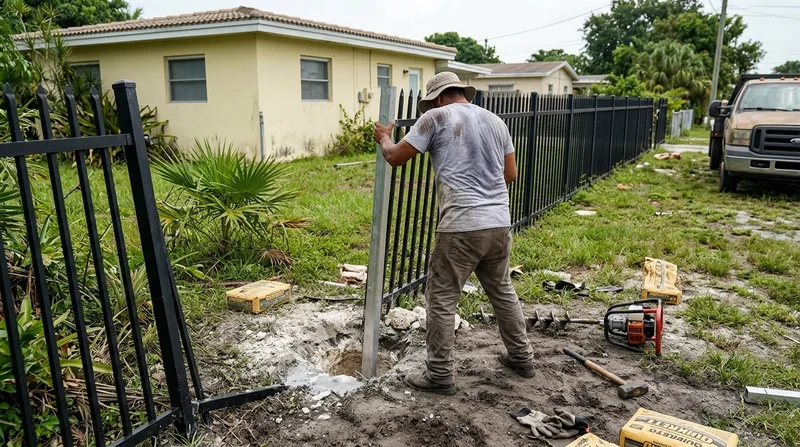




Fence repair in Miami is a year-round job shaped by salt air, sandy soil, and hurricane-force weather. Coastal humidity rots untreated wood at the ground line, galvanized fasteners corrode in months, and storm surge can loosen entire sections overnight. Unlike inland regions where frost heave lifts posts, Miami fences fail because of moisture, corrosion, and wind load on sandy footings that shift under pressure. We rebuild sagging sections, replace rusted hardware, and reset posts in concrete to hold them solid in the rock and sandy fill common across the county. Whether your fence leans after a storm, pickets have rotted at the base, or rails have pulled loose from posts, we diagnose the damage, propose repair when it makes sense, and execute the work with the trade precision that keeps a fence standing for years.
Why Fence Repair Matters in Miami's Coastal Climate
Miami's salt-laden air and high humidity create conditions that accelerate fence failure. Wood left untreated at the ground line rots within 18 months. Galvanized fasteners oxidize and lose holding power. Vinyl can become brittle under intense UV, and aluminum corrodes at connection points where dissimilar metals meet. A small repair caught early prevents a full replacement later, and a solid post reset in concrete holds far longer than one tamped in sand alone.
- Salt spray corrodes fasteners, hinges, and hardware faster than in inland regions, making regular inspection and replacement essential.
- Sandy soil drains rapidly but provides poor lateral support for posts, so concrete footing depth and diameter carry the full load.
- Hurricane winds and tropical storms loosen panels and shift posts, turning small leaks into structural failure within weeks.
- High water table and sustained humidity create capillary action at the ground line, rotting wood even when drainage appears adequate.
Catching these problems early and repairing them saves money and keeps your property secure and compliant with local codes. For details on how storm damage is handled, see our storm damage fence repair service.
Key info: In Miami and Coral Gables, fence height, setback, and material rules are set by the city or county building department. Permits are required in some jurisdictions and not others. We verify requirements with the local authority before work begins, and we always defer to deed restrictions and HOA architectural standards, which frequently govern height, material, and color in master-planned communities.
How We Approach Fence Repair in Miami: A Step-by-Step Process
We start with a thorough on-site inspection to identify the root cause of failure. A leaning fence may need only a post reset, but it could also signal foundation movement or soil erosion. Rusted fasteners are replaced, but if the wood or vinyl beneath is compromised, replacement of that section makes more sense than patching. We work from your property line and existing survey, install to meet local codes, and use materials that stand up to Miami's climate.
- We inspect the fence line, check post footings for movement, and test rail and picket integrity to isolate the failure point.
- We call 811 for a utility locate before digging any post holes, as required by Florida law.
- We remove damaged sections or reset posts in concrete, using galvanized or powder-coated fasteners rated for coastal environments.
- We verify final alignment and height against local building code and any HOA requirements on file.
- We clean up all debris and restore the fence line to a solid, finished state.
This methodical approach ensures that repairs hold and that you do not pay for unnecessary replacement. See our fence post repair and replacement service for more detail on how we stabilize failing footings.
Example: A homeowner in Miami Gardens noticed their board-on-board privacy fence leaning away from the property line after heavy rain. We inspected, found that one post had settled into soft sand and two others had rusted fasteners. We reset all three posts in concrete, replaced the fasteners with galvanized hardware, and braced the fence with anti-sag bracing on the affected section. Total cost was a fraction of replacing the entire 60-linear-foot run.
Repair Methods: What Works Best in Miami
| Repair Method | What It Does | Best For |
|---|---|---|
| Post Reset in Concrete | Excavate around the post, remove soft fill, and set in a concrete collar to anchor it against lateral movement. | Leaning or shifting fence sections caused by settling sand or root pressure. |
| Fastener Replacement | Remove corroded bolts, nails, and hardware and replace with galvanized or powder-coated fasteners rated for salt exposure. | Rusted connections, loose rails, or hardware failure on otherwise sound wood or vinyl. |
| Section Replacement | Remove and rebuild one or more panels, using new wood, vinyl, or chain link to match the existing fence line. | Rotted boards, cracked vinyl, or mesh that cannot be repaired without compromising the whole run. |
| Anti-Sag Bracing | Install diagonal bracing or tension bands on long runs to prevent racking and wind-induced sagging. | Tall privacy fences or chain link runs exposed to wind load without intermediate support. |
| Gate Repair or Hinge Replacement | Repair or replace hinges, latches, self-closing hardware, or gate operator components to restore function. | Gates that sag, do not latch, or automatic gate operators that fail or lose synchronization. |
Each repair method is chosen based on what will hold longest and cost least over time. A post reset in concrete costs less upfront than replacing the entire fence run and prevents future failure in the same spot.
Fence Repair Cost in Miami: What to Expect
Fence repair costs in Miami range from minor fastener replacement to major post and section work. Most repairs start at $475 to $650 for a single post reset or small section repair, and scale up based on the extent of damage, the material, and the linear footage involved. A full assessment on site is the only way to give you an accurate number, because the cost depends on what is actually broken and why.
Factors that affect the final price include the type of fence (wood, vinyl, chain link, or ornamental metal all have different labor and material costs), the number of posts that need resetting or replacement, whether fasteners or entire sections must be replaced, access to the fence line (some properties in Miami Beach or Coral Gables have limited space or require coordination with neighbors), and urgency (emergency storm repairs may carry a premium). Getting two or three estimates from local contractors helps you understand the range and what each proposal includes.
Do not assume the lowest bid is the best value. A contractor who proposes replacing an entire fence when a post reset would solve the problem is either padding the estimate or lacks confidence in the repair. We propose repair whenever the fence justifies it, and we explain why a full replacement makes sense when it does. For a detailed breakdown of our pricing across service types, see our full pricing overview.
Fence Repair Near Me: How to Hire the Right Contractor in Miami
Choosing a fence contractor is not just about price. The right contractor brings field experience, understands Miami's unique climate challenges, carries insurance, and is honest about what repair can achieve versus what requires replacement. Before you call, know what you are looking for: is the fence leaning, are fasteners corroded, is wood rotting at the ground line, or did a storm damage it? This clarity helps a contractor give you a faster, more accurate estimate.
When you are comparing contractors, ask about insurance and workers' compensation coverage. Fence work involves digging, heavy lifting, and power tools, and a contractor who carries coverage protects you and the crew. Fence licensing in Florida is set by county or municipality, not by the state, so requirements vary across Greater Miami. Always verify what the local building department requires in your jurisdiction before you hire. Check references with past clients, and ask whether they handle permits or whether you are responsible for pulling them.
If your property is in an HOA or master-planned community, confirm that the contractor understands deed restrictions and architectural standards before work begins. If the fence is near a pool, pool barrier compliance is governed by state law and local code, and the contractor should be familiar with those requirements. Finally, get a free estimate and a clear written scope of work before any digging begins. You can reach us at (786) 655-4173 for a free, no-obligation estimate, and we will walk you through the options and costs upfront.
Fence Repair in Miami: Pricing Guide
| Service | Price | Details |
|---|---|---|
| Single Post Reset in Concrete | Starting at $475 | Excavate, remove soft fill, and set post in concrete collar to anchor against sand and lateral movement in Miami soil |
| Fastener and Hardware Replacement | Starting at $550 | Remove corroded bolts and nails, replace with galvanized or powder-coated hardware rated for coastal salt exposure |
| Wood or Vinyl Section Repair or Replacement | Starting at $750 | Remove and rebuild one panel run, including posts, rails, pickets or boards, and fasteners matched to existing fence |
| Chain Link Repair or Tension Band Installation | Starting at $650 | Repair mesh, replace tension bands and stretcher bar, or install anti-sag bracing on runs exposed to wind load |
| Multi-Section Repair or Storm Damage Rebuild | On estimate | Large-scale damage, multiple posts, or extensive replacement requires on-site inspection to determine scope and cost |
| Free Estimate and Consultation | No charge | Call (786) 655-4173 for same-day or next-day inspection, written scope, and pricing with no obligation to book |
Indicative pricing, the exact cost depends on square footage, finish, and site access. Free personalized estimate within 24h at (786) 655-4173.


